
 Home »
Rage-Bait Capitalism: Why Internet Drama Feels So Huge
Last Tuesday, I set a timer on my phone for twenty minutes. I just wanted to sit on my couch, sip my hot coffee, and check a few notifications.
Forty-five minutes later, my coffee was ice cold, my heart was beating fast, and I was deep in a comment section war. I wasn't even reading about anything that mattered to my real life. I was furiously scrolling through an argument between two total strangers about whether cooking pasta in cold water is a "moral crime.":)
I didn't open my phone, wanting to get mad, but there I was: tense, annoyed, and typing out a sarcastic reply to someone I’ll never meet.
If you’ve ever found yourself in that exact same spot, I have good news for you: you aren't broken, or at least, I’m with you. We were just caught in the middle of rage-bait capitalism, a system designed to turn our bad moods into real money for tech companies.
To understand why online drama feels so big to us, we have to look past individual internet trolls and see how the web actually makes its money.
What Is Rage-Baiting?
At its simplest, rage-baiting is a trick creators use to make posts that intentionally get you upset, frustrated, or angry.
Unlike old-school clickbait that uses a mystery to make us curious, rage-bait goes straight for our angry emotions. The Cambridge Dictionary defines rage-bait as online content specifically made to make people angry, so they leave comments and share it.
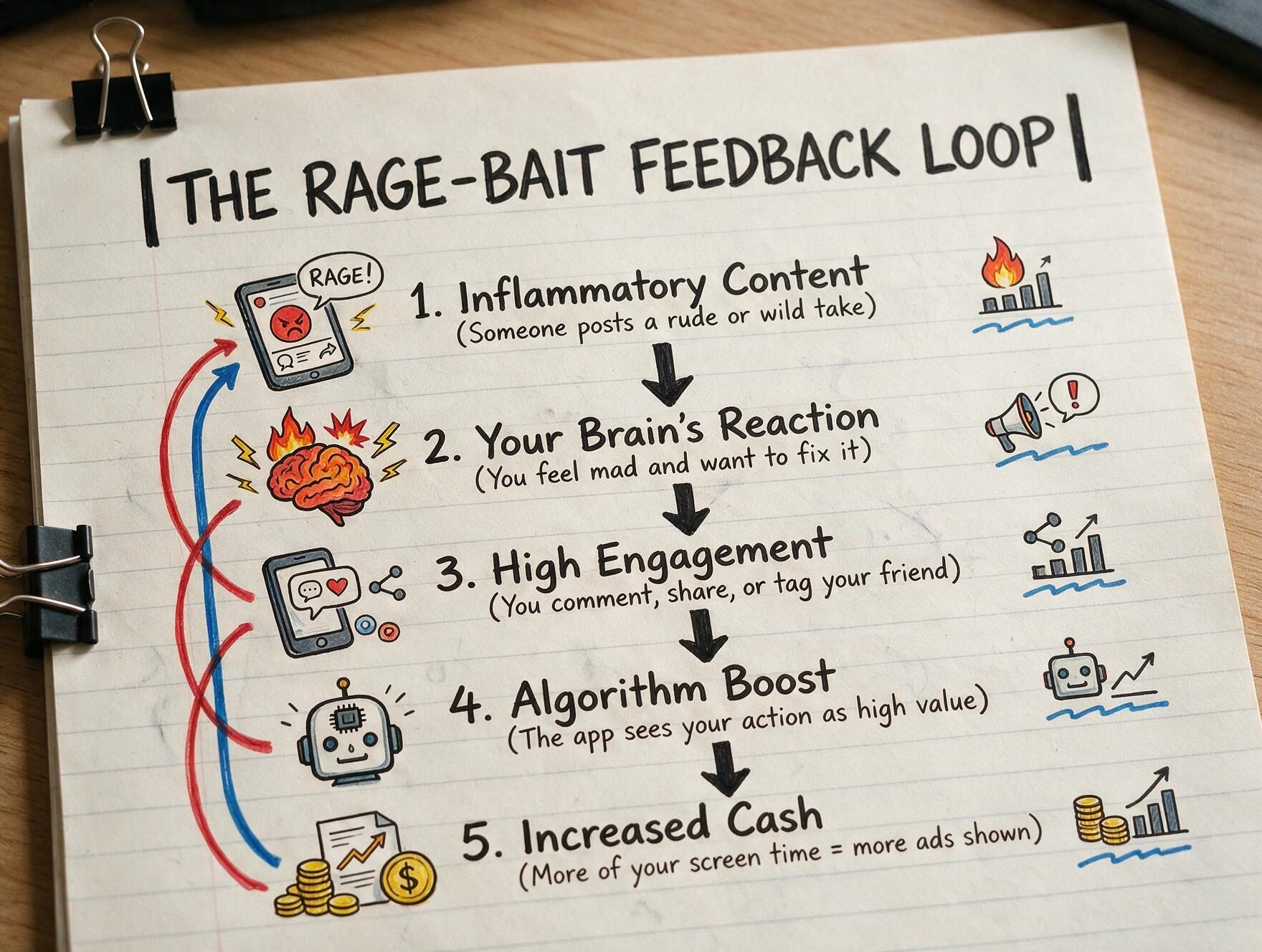
When something makes us mad, we react fast. We type out a reply to fix it, share the post to complain, or send it to a friend saying, "Can you believe this person?!!"
To an algorithm, all our comments look the same. The computer doesn't care if you write "This is amazing!" or "This is the worst opinion ever." Both mean you stayed on the app longer, so it shows that angry post to thousands of other feeds :)
What Research Says About Our Anger Online
Scientists have been studying this exact problem, and their data shows why these posts hook our brains so easily:
- Clickbait changed over time: Researchers looking at news headlines found that media moved away from "curiosity bait" to "rage bait." Making us curious only works once, but making us mad gets us to comment and fight over and over.
- Drama as entertainment: Studies show that we get drawn into online drama because it makes us feel morally superior. We like feeling like we are watching "justice" happen, even when it's just drama made to steal our time :)

Why Internet Drama Feels So Giant to Us
If you feel like every tiny argument online turns into a massive world war overnight, that’s because apps blow things out of proportion for you.
People over on Reddit's r/nosurf often talk about how almost everything online feels like constant drama. What used to be a fun place for us to catch up with friends now feels like an argument machine.
Here is why that happens to us:
- The money factor: Apps make money by showing you ads. The longer you stay on the app, the more ads you see. Because your brain naturally pays more attention to threats and bad news, anger keeps you scrolling much longer than happy posts ever could.
- Small fights go global: On apps like TikTok, Instagram, or X, a tiny fight between two people gets pulled out of its original group and pushed right onto your feed.

The Physical Cost: Social Media Burnout
When you consume endless drama, it takes a real toll on your body. When your feed is full of conflict, your brain treats those posts like tiny threats, keeping your nervous system in a state of low-grade stress.
Over time, this leads directly to social media burnout, leaving you feeling tired, irritable, and drained.
It also ruins your sleep! I used to check my phone in bed to relax, only to find a wild comment section that woke my brain right back up :) Learning how to stop late night scrolling was one of the best things I ever did for my rest.

Smart Tools to Get Your Peace Back
You don't have to rely just on your willpower to stop doomscrolling. Your willpower gets tired quickly, especially when apps spend billions of dollars designing feeds to break it.
You can put a few simple tools in place to give your brain a real break:
| Tool category | Tool | What it does | Best for |
| Ad Blocker | Stands Adblocker | Removes pop-ups, messy ads, and trackers from websites. | Keeping your daily web browsing fast and clean. |
| App Blocker | Freedom | Blocks distracting apps or sites on a timer across your devices. | Protecting your work time or family dinners. |
| Feed Cleaner | News Feed Eradicator | Hides your social media feed and shows a nice quote instead. | Checking your DMs without getting pulled into scrolling. |
| Focus Helper | Forest | Grows cute virtual trees when you leave your phone alone. | Breaking your habit of reaching for your phone when bored :) |
Easy Steps to Outsmart the “Outrage Machine”
When I realized how much time I was losing to fake drama, I made a few small changes to my phone habits. You can use this simple plan to protect your peace, too:
1. Clean up your screen: Block ads and trackers.
You can start by lowering the noise on your browser. Installing a simple extension like Stands Adblocker cuts out intrusive ads and stops trackers. You can also tweak your settings on sites like Facebook to block targeted, annoying posts.

2. Ignore bad takes entirely, and stop feeding the trolls.
Your best weapon against rage-bait is total silence. When you see a post clearly made to start a fight, don't comment, don't share, and don't tap "like." Click the options menu and hit "Not Interested" or block the account immediately.
3. Add extra steps for yourself.
Log out of your social apps at night, or move those apps off your home screen into a folder. When opening an app takes you three extra taps, you get a quick moment to ask yourself: "Do I actually want to read this right now?" :)
4. Choose intentional content.
Instead of letting algorithms pick what lands in front of your eyes, choose your content directly. Read your favorite blogs, listen to good podcasts, or subscribe directly to newsletters you enjoy.

Quick Questions Answered
Why does rage-bait work so fast on us?
Rage-bait triggers fast emotions in you, like anger and worry. Your brain wants to pay quick attention to bad behavior or threats, making anger one of the easiest ways for creators to grab your attention :)
If I comment to fix someone's bad take, am I helping?
Sadly, no. Algorithms treat all your comments as a good sign. When you leave a comment explaining why a post is wrong, the app thinks the post is popular and shows it to even more people!
Can an ad blocker help me with social media drama?
An ad blocker can't change what people post, but tools like Stands Adblocker hide sponsored content, pop-up ads, and trackers for you. This makes your screen MUCH quieter and cuts down on extra distractions.

