
 Home »
Is my phone listening to me?
You are sitting on your couch, talking to a friend about a very specific brand of vintage mechanical keyboards. You have never typed the words into a search bar, and never bought one online. Yet, two hours later, you open your phone, scroll past a video, and there it is: an ad for that exact vintage mechanical keyboard manufacturer.:)
Your immediate thought isn't just that it’s weird, but intrusive! It feels like a direct violation of your privacy, leading straight to a terrifyingly simple conclusion: my phone is wiretapping my living room.
This exact scenario plays out millions of times a day. On a popular thread on Reddit's privacy community, thousands of users share identical stories, trying to figure out where the “digital boundary” actually lies — a topic we discuss a lot in our own community on r/StandsApp as well. But if you look at how surveillance capitalism operates, the reality is both less like a spy thriller and far more unsettling than a rogue microphone.
Here is the definitive breakdown of whether your phone is listening, how digital tracking actually works, and the privacy stack you need to block it.
Is Your Phone Wiretapping You?
The short answer is no. Your phone is almost certainly not secretly recording your voice 24/7 to sell you ads. :) The long answer is that it doesn't need to!
From a purely technical perspective, continuously streaming audio from hundreds of millions of mobile devices back to corporate servers would collapse cellular networks, drain battery life in two hours, and burn through consumer data limits instantly. Furthermore, security researchers continuously monitor outbound data packets from iOS and Android devices. If tech giants covertly transmitted raw audio streams back to advertising servers, network traffic logs would expose it instantly.
However, academic research reveals why people remain convinced that their devices spy on them. According to a landmark study on conspiratorial thinking and everyday surveillance encounters, the human brain naturally attributes uncanny ad targeting to voice eavesdropping because people cannot comprehend the sheer scale of modern predictive data aggregation.
When an ad feels like magic, we assume a microphone was involved. In reality, mathematical prediction operates at a scale that borders on psychological manipulation.
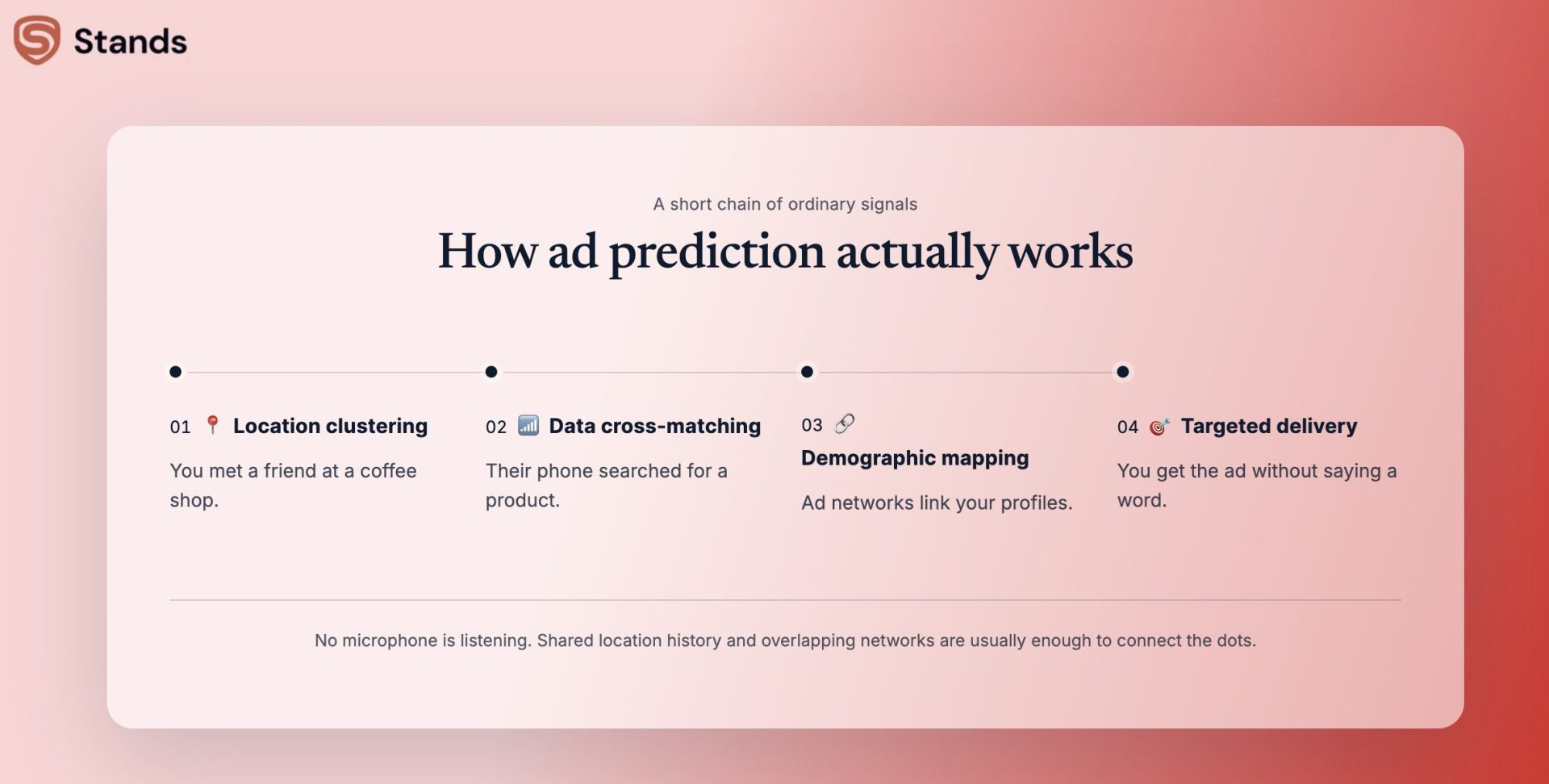
The Tech Behind the "Eavesdropping" Myth
If tech companies aren't listening to your living room chats, how do they show you ads for things you only talked about? Ad networks build hyper-detailed digital twins of consumers by connecting seemingly unrelated data points across millions of devices. :)
Here are the primary ways ad networks shadow your steps without needing an active microphone:
- Lookalike and proximity cross-matching. If you sit across a table from a friend who spent twenty minutes browsing a specific product earlier that morning, ad networks use precise location telemetry such as Bluetooth, Wi-Fi IDs, and GPS coordinates to know you spent time together. The system infers that their interests are now relevant to you.
- Predictive behavioral analytics. Machine learning algorithms track your routines down to the minute. If thousands of people with your exact demographic profile, location history, browsing habits, and purchase history consistently buy a product at a specific time of year, algorithms serve you the ad right before you even realize you want the item. :)
- Ultrasonic audio beacons. While apps don't record your conversations, some third-party software kits buried inside mobile applications use high-frequency ultrasonic tones from TV commercials, store speakers, or web ads to track your physical presence across locations.
The illusion of an open microphone is simply predictive algorithms knowing you better than you know yourself! :)

What Is Active Listening vs. Passive Metadata?
To understand how tracking works, you need to know the difference between active voice recording and passive metadata harvesting.
| Surveillance vector | How it works | Primary risk level |
| Active audio recording | Apps capture and transmit your spoken voice continuously. | Low (Operating systems restrict this heavily) |
| Trigger-word monitoring | On-device systems listen for "Hey Siri" or "OK Google." | Medium (Accidental triggers can upload voice snippets) |
| Metadata & Location tracking | Apps gather background IP logs, Wi-Fi networks, and device IDs. | High (Runs continuously without your awareness) |
| Data broker aggregation | Third parties buy consumer behavioral profiles to build identity graphs. | Critical (Feeds predictive ad algorithms) |
Every time an app asks for location access, contact syncing, or background refresh, it feeds a massive pipeline of data brokerage. As a Gallup survey on consumer awareness highlights, millions of people use digital products without fully realizing how companies monetize their daily habits behind the scenes.
How Microphones Actually Misbehave
While tech giants aren't running illegal mass wiretaps, real microphone abuse happens all the time. It usually occurs through three distinct paths:
- Over-permissive mobile apps. Games, flashlight apps, and unverified utility tools frequently ask for microphone permissions during installation. Users grant access without reading, enabling background audio telemetry for market research.

- Smart home voice assistants. Smart speakers listen for wake words, and when an accidental activation occurs, systems send short audio clips to cloud servers for machine learning analysis and human review.
- Active listening software via smart TVs. Smart TVs use Automatic Content Recognition (ACR) to analyze ambient audio from your living room, matching it against media databases to track what programs or ads you watch.
Essential Privacy Tools and Apps to Reclaim Control
If you want to break the predictive ad loop, protect your device telemetry, and regain control over your digital footprint, you need a proactive privacy stack! :) Below are essential tools and applications built to combat data collection.
1. System Level & Network Protection
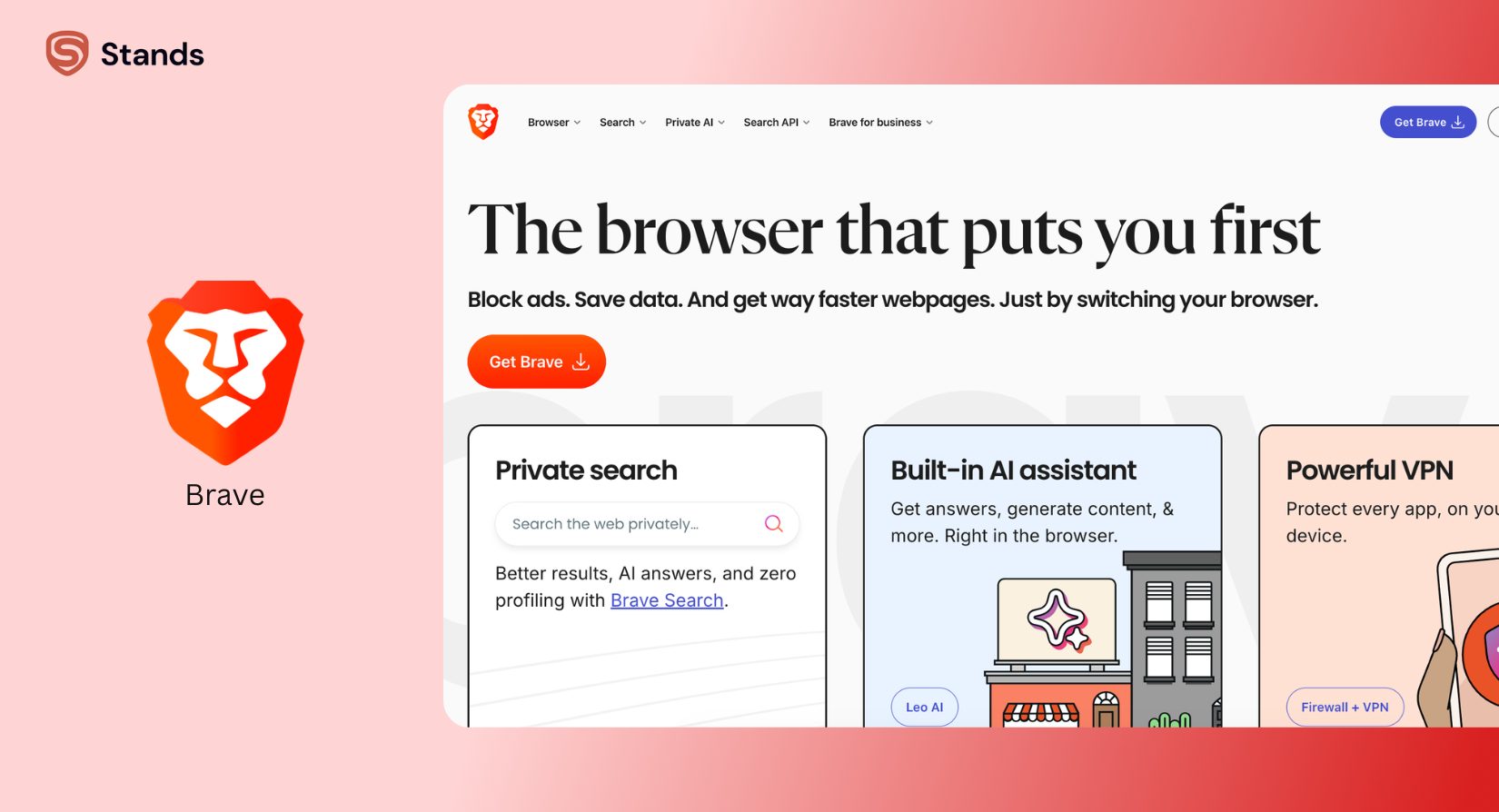
- Brave or DuckDuckGo browsers instead of the default system browsers. They block trackers, scripts, and fingerprinting attempts.
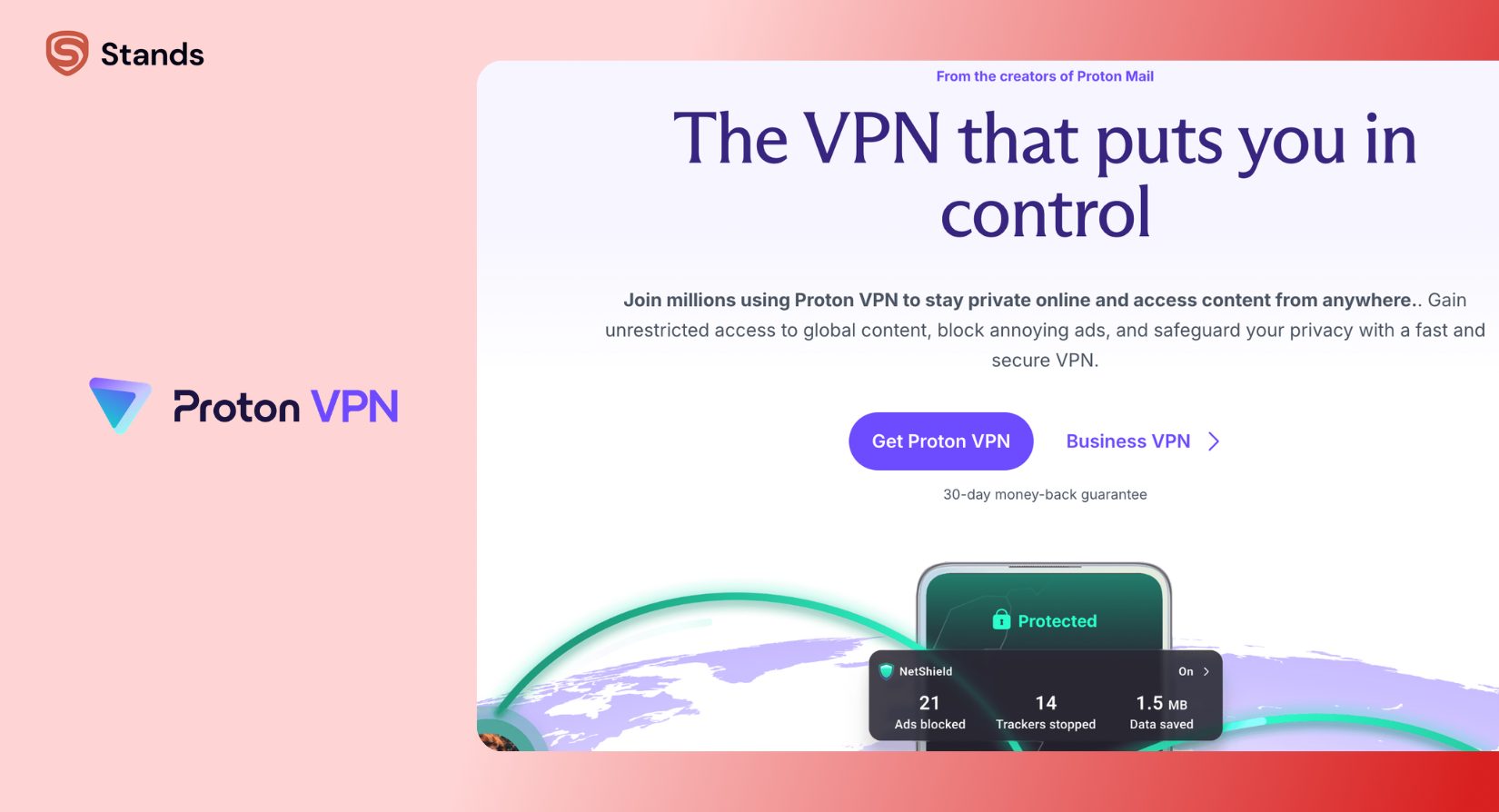
- ProtonVPN / Mullvad VPN. They work with your internet traffic, mask your real IP address, and prevent internet service providers from harvesting your network activity.
2. Browser Extensions & Search Security
- Ad-blocking extensions: To stop invasive tracking scripts, pop-ups, and targeted ad networks across your devices, use an extension like Stands AdBlocker to help shield your devices from cross-site telemetry. If you browse in private mode, make sure to read this guide on how to enable extensions in incognito mode so your protection doesn't drop when you switch windows. :)

- Privacy-focused search engines: Traditional search engines record every query to refine your ad profile. Switching your default options is critical; check out our breakdown of the best search engines for privacy to prevent search-history targeting.
3. Mobile OS Permission Hardening
- iOS privacy indicators & access report. Apple's built-in feature alerts you with an orange or green dot whenever an app accesses your microphone or camera.
- Android privacy dashboard provides a full timeline of which apps accessed your location, camera, or microphone over the last 24 hours. Disable permissions for any app that doesn't strictly need them to function.

Actionable Steps to Lock Down Your Phone
Securing your device doesn't require throwing your smartphone into a river! (at least, for now:)) We have prepared a checklist to help you reduce behavioral tracking:
- Disable voice assistants. Turn off "Hey Siri" or "OK Google" wake-word listening in your system settings if you rarely use them.
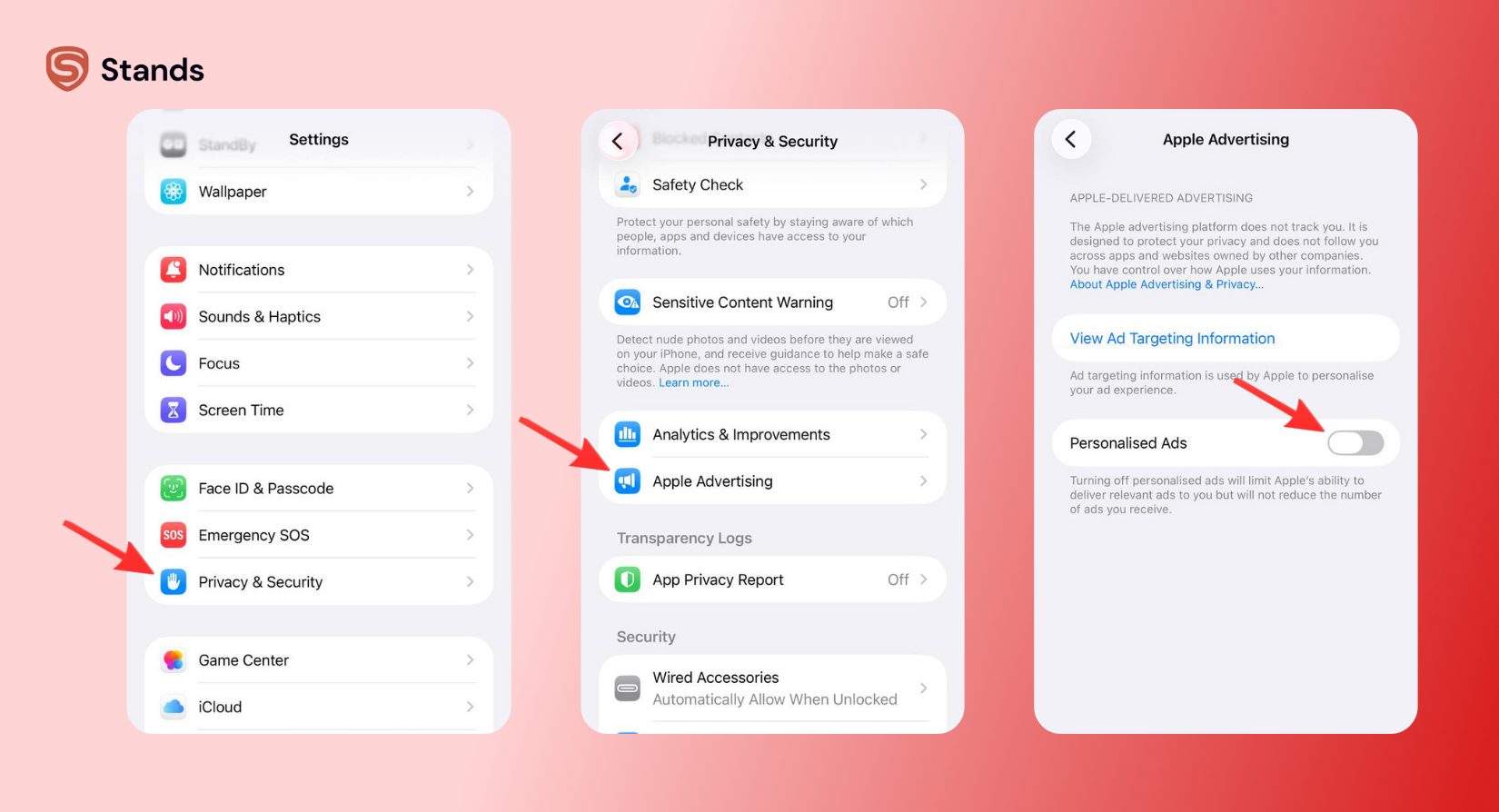
- Turn off personalized ads. Opt out of targeted ad identifiers on iOS (Settings > Privacy & Security > Apple Advertising) and Android (Settings > Security & Privacy > Privacy > Ads).
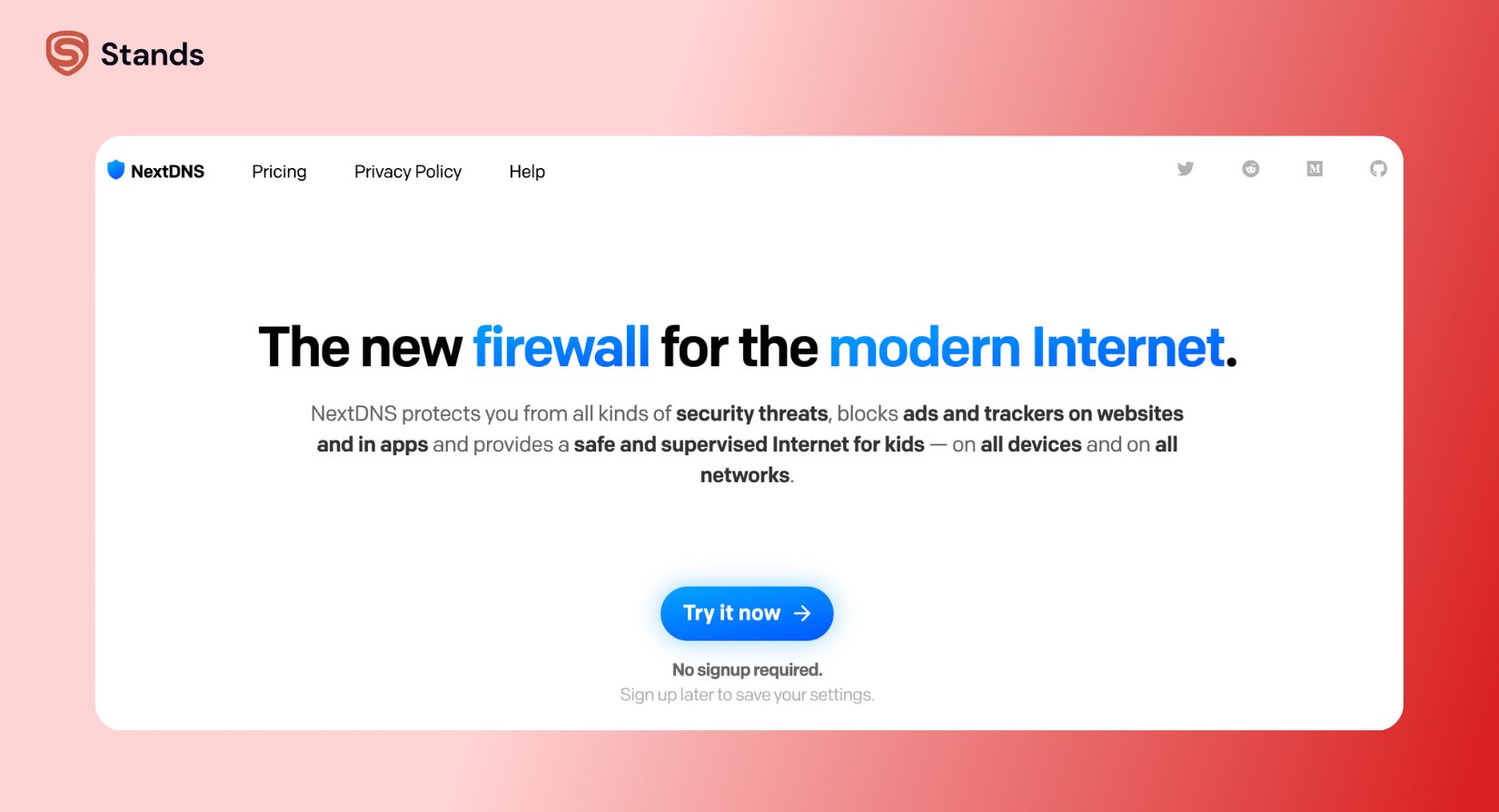
- Cover your digital tracks. Use encrypted browsers, route your traffic through private DNS servers, and rely on privacy tools to prevent ad networks from linking your daily physical habits to your digital profile.
Your phone might not record your conversations, but the alternative predictive data aggregation is just as invasive. You can protect your privacy when you understand how the system actually works and put the right tools between your personal life and the ad tech ecosystem! :)

