Home »

Is Screen Time Raising Your Cortisol?
You're sitting on the couch to just relax for five minutes, pull out your phone to check a quick message, and suddenly an hour is gone. When you finally put the phone down, you've got a sore neck, your teeth are clenched, and your heart is pounding.
On a popular Reddit thread discussing screen addiction and daily anxiety, lots of users share identical stories, trying to figure out where healthy screen habits actually begin — a topic we also discuss on r/StandsApp.
The actual cause is cortisol, your body's main stress hormone. Screens in themselves aren't the problem. The problem is how we use them: the constant barrage of alerts, the screens glowing in the dark, the constant onslaught of online ads that pop up at you. In fact, clinical trials from Harvard Medical School show that light-emitting screens delay the production of melatonin, keeping alertness pathways firing when your body needs rest. Once you understand that screens are the trigger for your stress hormones, you can take control of your habits and get back to feeling calm.
- What is cortisol and how does it regulate your body?
- The mechanisms: how screen time triggers cortisol
- Physical Signs Your Digital Habits Are Affecting Your Hormones
- How doomscrolling and targeted ads compound digital stress
- Practical steps to regulate cortisol while staying connected
- Helpful tools and apps to lower your screen stress
- Conclusion
What is cortisol and how does it regulate your body?
Cortisol works like an alarm bell within the body. There are two little glands sitting on top of your kidneys, and they secrete this hormone into your blood when you're under pressure or in a state of danger. Your brain and the adrenal glands communicate with each other via the HPA axis. Cortisol does a whole lot of the work, regulating your blood pressure and blood sugar, and helping you wake up.
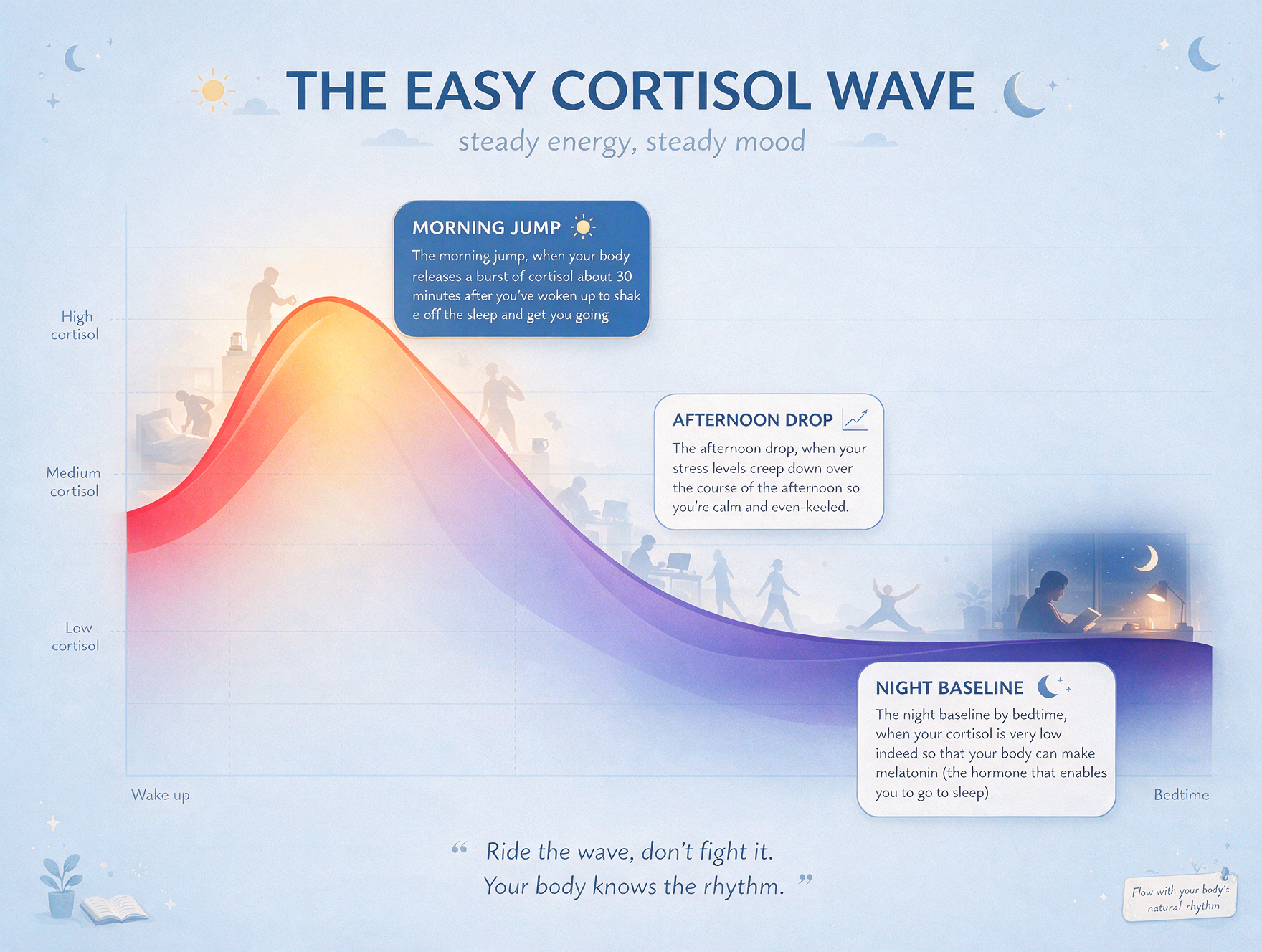
On an ordinary day without crazy distractions, your cortisol follows an easy daily wave:
- The morning jump, when your body releases a burst of cortisol about 30 minutes after you've woken up to shake off the sleep and get you going.
- The afternoon drop, when your stress levels creep down over the course of the afternoon so you're calm and even-keeled.
- The night baseline by bedtime, when your cortisol is very low indeed so that your body can make melatonin (the hormone that enables you to go to sleep).
A landmark study published in the Journal of Psychiatric Research found that excessive nighttime smartphone usage directly disrupts natural cortisol rhythms and spikes systemic inflammation markers. When you're staring at screens all day, and all night, you're effectively destroying that healthy wave. Your body gets all confused and starts to secrete cortisol at the wrong times. You then feel tired all day, your tummy aches, and you catch colds easily.
The mechanisms: how screen time triggers cortisol
Screen time activates your stress system in three main ways: the blue light, the crap websites, and the nasty surprise notifications.
1. Blue light and broken sleep
Phone and laptop screens are literally blasting bright blue light straight into your eyes. The sensors in your eyes pick that up and tell your brain that it's midday, even though you're lying in bed at 11 pm. Your brain goes into panic mode, shuts down your sleepy melatonin, and floods you with fresh cortisol. You're now wide awake staring at the ceiling.
A bright screen in a pitch-black bedroom tells your brain it's noon and keeps your stress system up all night.
Clinical research from the University of Houston showed that participants who blocked blue wavelengths before sleep experienced a 58% increase in nighttime melatonin levels, demonstrating that artificial light directly suppresses nighttime hormonal recovery.

2. Chaotic ads and visual clutter
Messy web pages are a massive brain tax. You're immediately bombarded with video ads that start playing on their own, flashing banners, and huge pop-ups that just grab you. Your brain has to work absolutely flat out to ignore all of that junk. Every pop-up is a little shock that essentially pushes your body into panic mode.
You can clean up that visual clutter with Stands Adblocker to get rid of the annoying pop-ups and leave your web pages clean and quiet.

3. The endless ping of notifications
App creators build alerts to work exactly like slot machines. Every buzz, every red dot, every chime is designed to make you jump. Who texted? What's up? Did they reply? When your phone is buzzing dozens of times an hour, you just never get a break from your adrenal glands.
| Digital Habit | What Happens to Your Body | What It Does to Cortisol |
| Late-Night Scrolling | Tricks your brain into thinking it is daytime | Ruins your evening drop in stress levels |
| Flashing Banner Ads | Forces your eyes to dodge distractions | Keeps your body tense all day |
| App Notifications | Makes you jump with tiny startle shocks | Pushes your adrenal glands into overdrive |
| Reading Bad News | Signals your brain that danger is close | Floods your blood with stress chemicals |
Physical Signs Your Digital Habits Are Affecting Your Hormones
High cortisol does not send you a warning email, it rather shows up in your body through simple everyday problems:
- “Tired but wired”: you're dead tired on the sofa, the second you get into bed, though your brain's off the hook.
- The 3.00 pm crash: you hit a wall every afternoon and are just looking for something sugary or an extra cup of coffee to keep your eyes open.
- Tight shoulders and shallow breathing. You hold your breath or breathe shallowly the moment you open your email inbox.
- Stomach troubles: high stress will simply stop your gut from digesting the food properly, leaving you bloated and uncomfortable.
- Short temper: you get angry or irritated when an app is slow to load or when someone interrupts you in the middle of reading.

How doomscrolling and targeted ads compound digital stress
Doomscrolling is just reading the bad news on social media over and over again. Your brain has been designed for ages to be on the lookout for danger (bears, bad storms, etc.). When you're faced with a stream of wars, crashes, and fights on a social media app, your brain interprets that as danger happening in your living room right now. Your stress alarm goes off and cortisol floods your blood. Creepy ads make it all the worse. They track where you click and serve up ads specifically designed to make you feel bad about yourself in the hope that you'll then buy something.
You can stop this ad tracking on your computer by installing the Stands Chrome adblocker. If you're primarily on a phone, then use the Stands adblocker for Android to stop the relentless stream of ads that fill your screen and drive you mad.
Practical steps to regulate cortisol while staying connected
You don't need to throw your phone in the bin to deal with your stress, but some simple boundaries to keep your devices in check would be very helpful.
Build a better morning
Don't touch your phone in the first 30 minutes of the day. The very act of picking up your phone as soon as your eyes open is a stressor to your brain before you've even got out of bed.
- Leave your phone out of the bedroom. Put it on the charger in the kitchen, and you'll wake up to a normal alarm clock rather than your phone.
- Look at real morning sun: just step outside or look out an open window for ten minutes straight immediately upon waking so your brain gets the signal that the day has actually started.
- Drink water right away. Have a full glass of water before you drink any coffee at all to rehydrate your body, which has lost all that moisture over the course of the night.

Clean up your space
Get rid of the clutter on your screen so your eyes can rest.
- Turn on grayscale: set your phone screen to black and white. Apps look much duller without the bright colors, and you end up scrolling far less.
- Block loud ads: install ad-blocking tools to kill off the loud ads, the auto-playing videos, and the sneaky tracking scripts.
- Set an 8.00 pm screen curfew: turn night mode on to warm your screen, or just switch your screens off two hours before you go to bed.
Try the 20-20-20 Rule
Staring at screens makes you sit up quite stiffly and take tiny breaths. Every 20 minutes, you need to stop and look at something 20 feet away for 20 seconds. Take three deep, slow belly breaths during that break to help your body relax and drop the tension.
Helpful tools and apps to lower your screen stress
You can use dedicated apps and smart tools to create guardrails around your screen habits so you don't have to depend on willpower at all.
| Tool Type | Recommended Tool | How It Helps You Lower Stress |
|---|---|---|
| Ad and Tracker Blocker | Stands Adblocker | Stops flashy pop-ups, noisy auto-playing video banners, and ad tracking that clutter your screen. |
| Focus and App Blocker | Opal or One Sec | Forces you to take a deep breath before opening social apps, breaking mindless scrolling habits. |
| Blue Light Filter | f.lux | Automatically warms up your computer screen colors at sunset so the display does not keep you awake. |
| Strict Web Blocker | Freedom or Cold Turkey | Locks distracting websites and apps across your computer and phone during set work hours. |
| Analog Alarm Clock | Any basic digital or bell clock | Lets you charge your phone in another room overnight so you wake up without alerts in your face. |
Conclusion
You need your phone and your computer to work, talk to friends, and get on with things. It is also possible to use the technology and enjoy life.
The trick is taking charge of your screens instead of letting them run your life. When you turn off push alerts, block noisy ads, and put your phone down before bedtime, you protect your body from unnecessary stress. Use your devices to help your day, not to drain your health. :)