
 Home »
Non-skippable ads on YouTube
(and why they’re suddenly getting longer)
You open YouTube, click a video, and before anything even starts, an ad rolls in that you can’t skip.
No button. No countdown trick. Just you, the ad, and a forced 15–30 seconds of patience.
If it feels like these ads are becoming more common lately, you’re not imagining things. YouTube is rolling out longer non-skippable ads, especially for people watching on TVs. And yes, they can last up to 30 seconds now.
So let’s break it all down:
- what non-skippable ads are
- why YouTube keeps pushing them
- why they’re getting longer
- and what viewers can actually do about them
Grab a coffee as this topic deserves a proper deep dive :)
- What are non-skippable ads on YouTube?
- Why YouTube is introducing longer non-skippable ads
- Meet VRC Non-Skip ads
- The growing frustration with YouTube ads
- Controlling what you see on YouTube
- So what can you actually do about ads?
- Why YouTube still relies heavily on ads
- What the future of YouTube ads might look like
- Conclusion
What are non-skippable ads on YouTube?
Non-skippable ads are exactly what they sound like: ads you cannot skip.
Unlike regular YouTube ads that let you hit Skip after five seconds, these ones must play completely before your video starts.
They usually appear in three places:
- Pre-roll ads – before the video starts
- Mid-roll ads – during the video
- Post-roll ads – after the video ends
Most of the time, they last 6–15 seconds, although sometimes they can stretch longer depending on the device you’re watching on.
And if you’re watching YouTube on a smart TV or streaming device, you may now see 30-second non-skippable ads.
Yep… a full half-minute. Not exactly the snack-sized ads people got used to on mobile.
Why YouTube is introducing longer non-skippable ads
The short answer: TV screens.
More and more people are watching YouTube on:
- smart TVs
- Apple TV / Roku devices
- game consoles
- streaming sticks
In other words, YouTube is slowly turning into the new television.
And if you’ve ever watched traditional TV, you know the drill — commercials are part of the deal.
Because of that shift, YouTube recently started rolling out 30-second non-skippable ads on TV devices. The idea is that people sitting on a couch are more likely to watch an ad than someone quickly scrolling on their phone.
From a business perspective, it makes sense.
From a viewer perspective… well, it’s a bit annoying :)

Meet VRC Non-Skip ads
Behind this change is something called Video Reach Campaign (VRC) Non-Skip ads.
Google recently made these campaigns generally available for advertisers, which basically means brands can now run large-scale campaigns using unskippable ads across YouTube.
Here’s how they work.
Advertisers upload several versions of their ads:
- 6-second ads
- 15-second ads
- 30-second ads
Then Google’s AI automatically decides which ad format to show and where.
The goal is simple: maximize reach while making sure viewers see the full ad message.
For brands, that’s pretty powerful.
For viewers… it means there’s a good chance you’ll be seeing more mandatory ads in the future.
Why advertisers love non-skippable ads
Let’s be honest — advertisers aren’t exactly sad about this update :)
Most viewers skip ads the moment they can. In fact, the average YouTube ad view rate is just 31.9%, meaning less than a third of viewers actually watch an ad to completion.
Non-skippable ads solve that problem by guaranteeing something advertisers love:
100% ad completion.
That means every viewer sees the entire message.
And that’s valuable because:
- brand awareness increases
- marketing messages are fully delivered
- storytelling becomes possible within the ad
Instead of squeezing a message into five seconds, brands can actually build a mini story in 15–30 seconds.
Of course… that storytelling comes at the cost of your patience :)
Why viewers find them annoying
Let’s not sugarcoat it — most viewers aren’t big fans of non-skippable ads.
The complaints usually sound something like this:
- “I just wanted to watch a 2-minute video.”
- “Why am I watching two ads before a 30-second clip?”
- “Why is it always the same ad again and again?”
Sound familiar? :)
The problem isn’t just the ads themselves — it’s the frequency and repetition.
When ads interrupt videos too often, the viewing experience starts feeling more like traditional TV… which many people left behind for YouTube in the first place.
And that’s why users are constantly looking for ways to manage their YouTube experience.
YouTube is also fighting ad blockers
Here’s where things get interesting.
At the same time, YouTube is increasing ads, and it’s also cracking down on ad blockers.
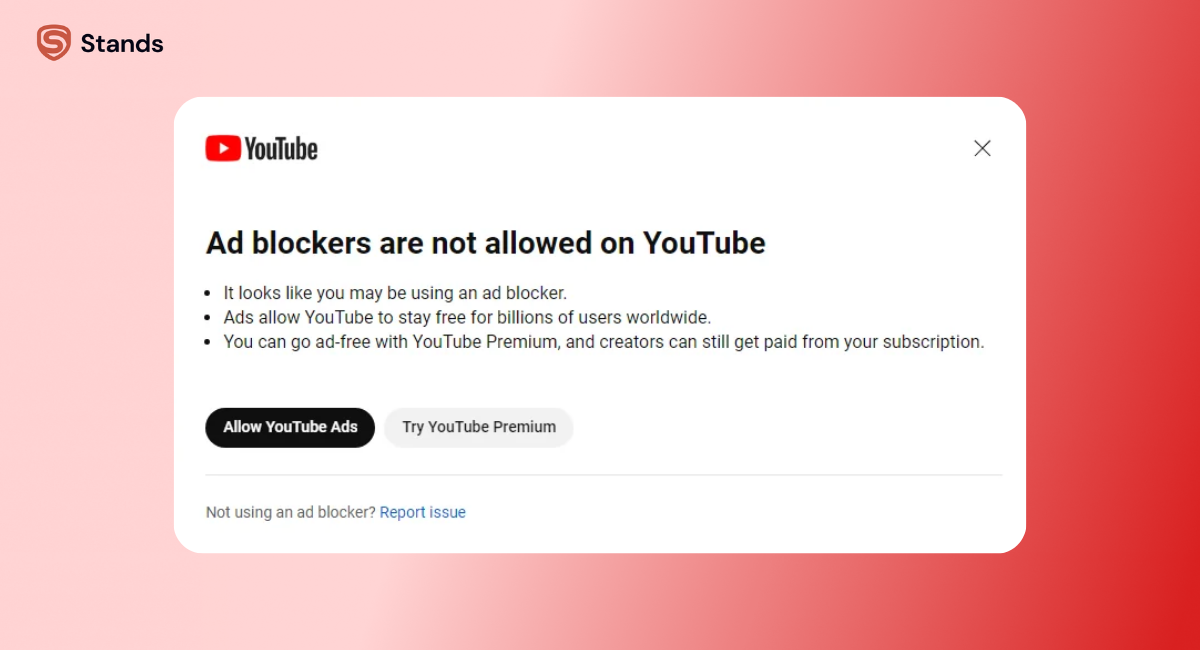
If you’ve used an ad blocker recently, you might have seen warnings like:
“Ad blockers are not allowed on YouTube.”
YouTube has been testing different systems designed to detect and block ad-blocking tools.
If you’re curious how that works, you can read more about it here.
And if you’ve ever encountered the infamous “ad blockers violate YouTube’s terms” pop-up, you’re not alone. The platform has been experimenting with multiple ways to prevent ad blocking.
This article explains the situation in detail.
In short, it’s becoming a bit of an arms race between YouTube and ad-blocking tools.
The growing frustration with YouTube ads
YouTube’s ad ecosystem has grown massively over the years.
What started as simple pre-roll ads has evolved into a full system that includes:
- bumper ads
- mid-roll ads
- sponsored cards
- overlay ads
- non-skippable ads
- YouTube Shorts ads
Sometimes it can feel like ads are everywhere :)
And the frustration is real — especially when ads interrupt long videos multiple times.
That’s why many viewers are exploring different ways to customize their YouTube experience.
Controlling what you see on YouTube
Ads aren’t the only thing people want to manage on YouTube.
Sometimes viewers also want to:
- block certain channels
- filter unwanted content
- avoid clickbait creators
If that sounds familiar, this guide might help.
Blocking channels can be surprisingly useful — especially if your recommendations keep getting filled with content you don’t want to see.
A cleaner feed often makes YouTube feel much more enjoyable :)
So what can you actually do about ads?
Let’s be realistic.
Completely removing ads from YouTube isn’t always easy, especially with the platform’s increasing restrictions.
But there are ways to improve the situation and make your browsing experience smoother.
Many users turn to browser tools that help reduce ad clutter across the web — including YouTube.
One example is the Stands AdBlocker extension for Chrome.
Tools like this aim to create a cleaner, less distracting browsing experience by filtering intrusive ads and improving page performance.
And honestly, once you get used to a calmer browsing experience, it’s hard to go back :)
Why YouTube still relies heavily on ads
Of course, there’s a reason YouTube keeps pushing ads.
Running the platform isn’t cheap.
YouTube hosts billions of videos, streams massive amounts of data every day, and pays creators through its partner program.
Advertising is what keeps that ecosystem running.
Without ads, the platform would likely need to rely much more on subscriptions or paywalls.
So in many ways, ads are the trade-off that allows viewers to watch most content for free.
Still… that doesn’t mean people have to love them :)
What the future of YouTube ads might look like
Looking ahead, a few trends are becoming pretty clear.
First, TV viewing will keep growing.
More people are watching YouTube on big screens than ever before, which means ad formats will likely become more TV-like.
Second, AI will play a bigger role in ad delivery.
Google’s advertising system already uses machine learning to decide:
- which ad to show
- when to show it
- how long it should be
The goal is to maximize engagement while keeping viewers from leaving the platform.
Third, the battle between YouTube and ad blockers will probably continue.
Every time YouTube introduces a new restriction, developers look for new ways to work around it.
So this tug-of-war isn’t ending anytime soon :)

Conclusion
Non-skippable ads on YouTube are becoming a bigger part of the platform.
With the introduction of VRC Non-Skip campaigns and longer 30-second TV ads, advertisers now have more ways than ever to reach viewers.
From a business standpoint, it makes perfect sense.
From a viewer standpoint… it can feel like ads are taking over your favorite videos.
The good news is that users still have ways to customize their experience, whether that means blocking channels they don’t like, learning how YouTube’s anti-adblock systems work, or using tools that help keep browsing a little cleaner.
Because at the end of the day, YouTube should still feel like what it was meant to be:
A place to watch videos you love without constant frustration :)
And hey — if an ad does sneak in occasionally, maybe it’s just the universe reminding you to stretch, grab a snack, or refill your coffee.

